Beyond Perfection: Portrait Photography, Women and the Freedom to Age
A personal photographic manifesto about beauty, identity and the human face.
There is something I have never understood about the way women are photographed.
Why should a woman have to look younger to be considered beautiful? Why should her skin be smoother, her body more symmetrical, her face more perfect, before she can be considered worthy of a photograph? And why, in an age when photography has never had so much power to transform reality, do we still feel the need to erase so much of what makes a person recognizable?
These questions are at the heart of my work. My photographic dictum is simple:
I want to help free women from the fear of aging and from the pressure of aesthetic perfection.
Not by denying beauty. Not by rejecting elegance, fashion or sensuality. But by making room for something deeper: presence.
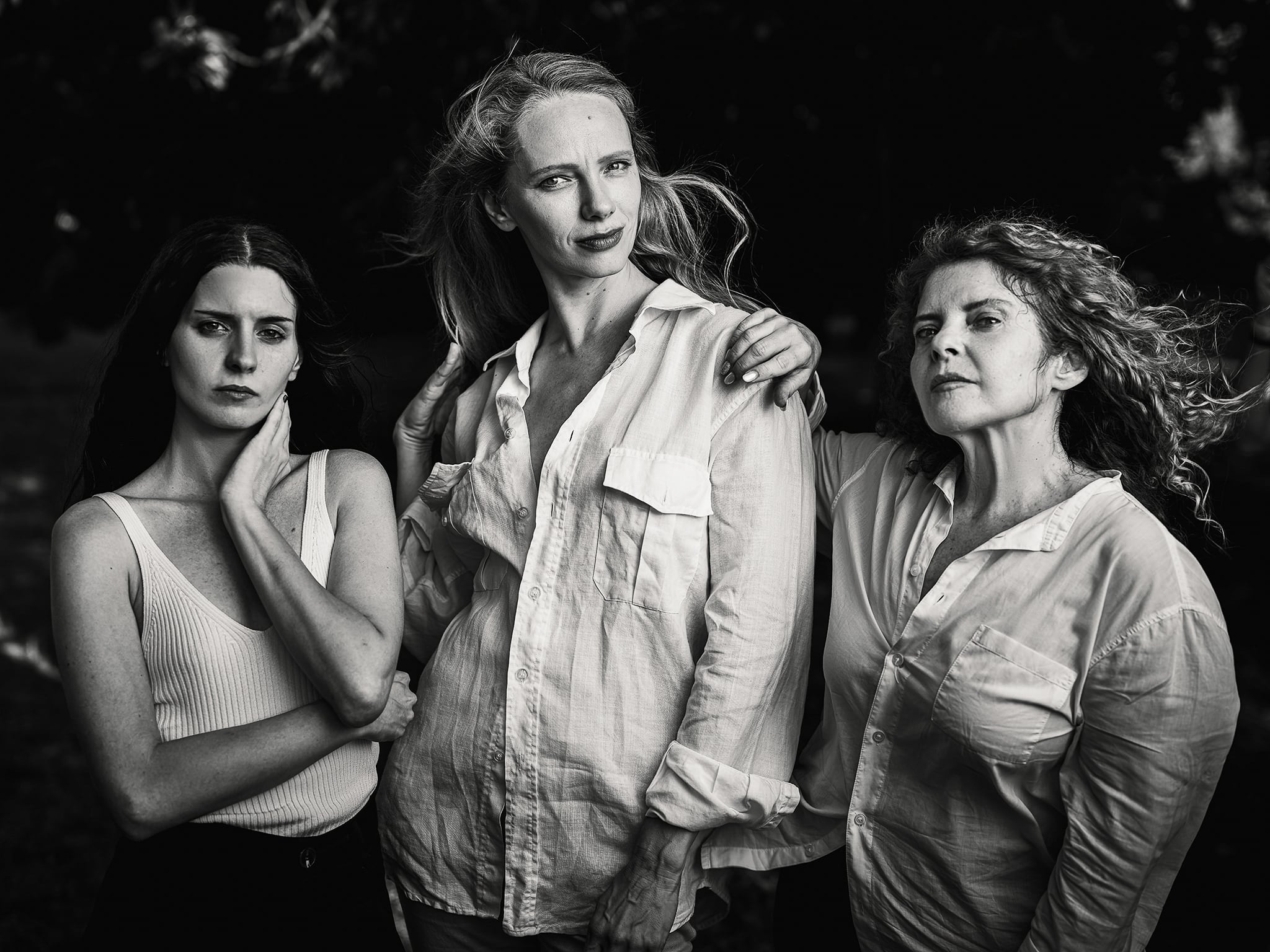
Photography should not erase a life
A portrait is often described as a representation of a face. For me, that definition is far too small.
A portrait can contain a person’s history, confidence, fragility, experience, contradictions and silence. Sometimes the smallest gesture says more than a perfect smile. A line around the eyes can tell us more than flawless skin. A posture can reveal something that makeup could never communicate.
This is why I am increasingly interested in what happens when photography stops trying to improve a woman and starts trying to see her. There is an important difference between these two things.
The first asks: “How can I make her look more beautiful?” The second asks: “Who is the woman standing in front of my camera?” That difference changes everything.
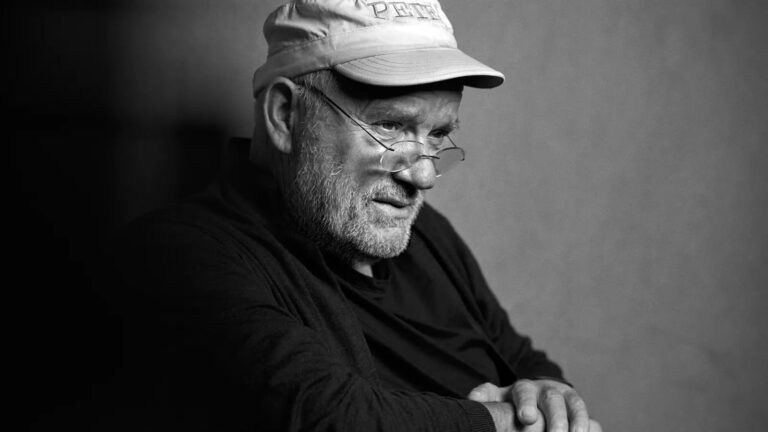
The influence of Peter Lindbergh
Peter Lindbergh is one of the photographers who most clearly changed the way I think about women and photography.
His work challenged the idea that fashion photography had to depend on excessive glamour, artificial perfection and the visual erasure of age. His photographs often allowed personality, emotion and individuality to remain visible instead of being polished away. His approach became particularly associated with a more natural, cinematic vision of women.
What interests me most about Lindbergh is not simply his black-and-white photography. It is his belief that a woman should not have to disappear behind an idealized image of femininity.
That idea is fundamental to my own work. A portrait should not say: “This is how you should look.” It should say: “This is who you are.”
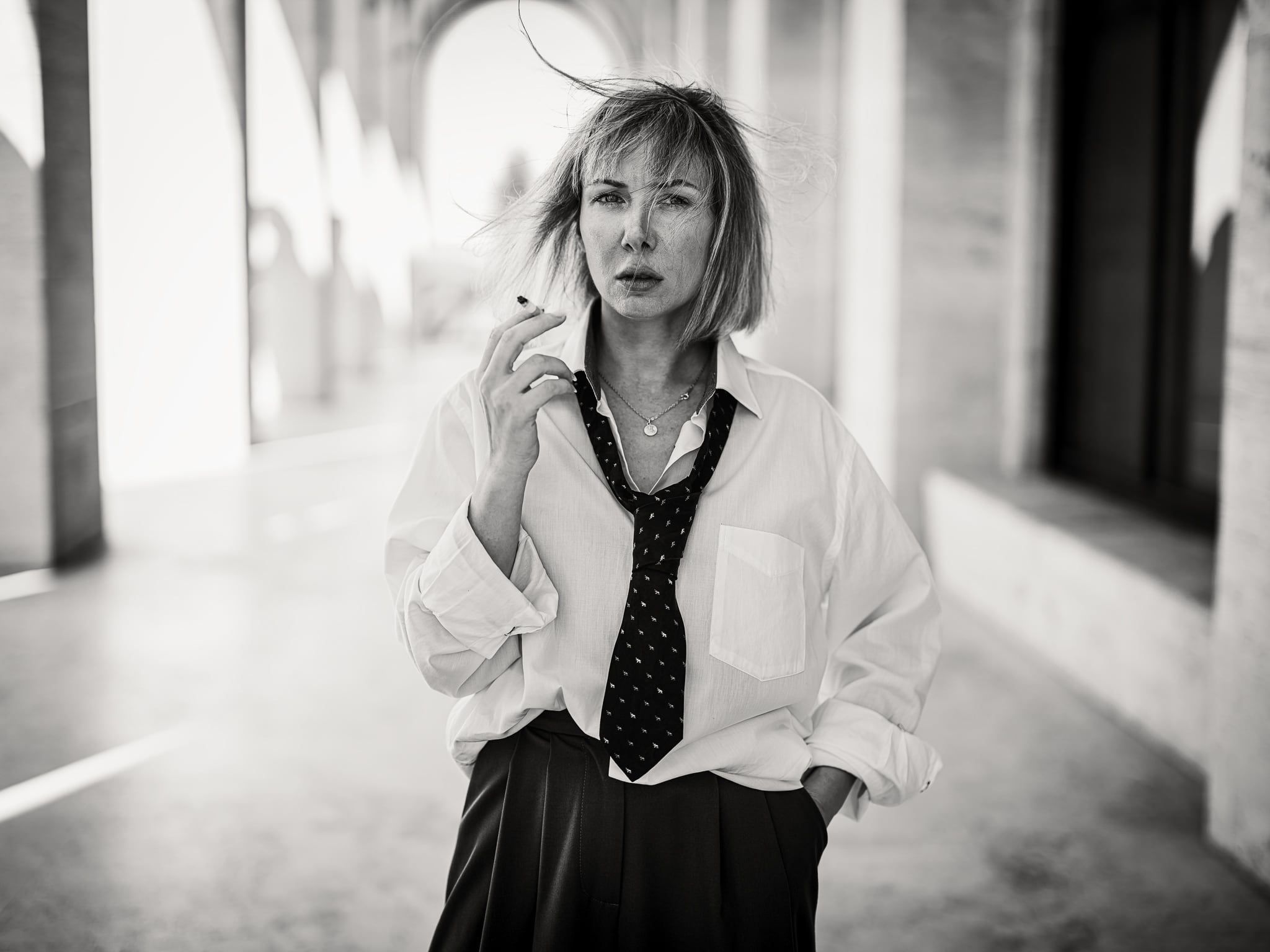
Richard Avedon: presence before decoration
Richard Avedon approached portraiture from another direction.
His portraits could be radically stripped down. By removing props and distractions, he often placed the individual at the absolute centre of the photograph. The Met describes this aspect of his work as an approach in which the face, gaze, clothing and gesture become the essential elements of characterization.
This is an important lesson for me. A photograph does not always become stronger because we add more, sometimes it becomes stronger when we remove.
- Remove the unnecessary styling.
- Remove the artificial expression.
- Remove the visual noise.
- Remove the obligation to perform.
And then wait.
A woman sitting in front of a camera does not necessarily need to smile. She does not need to appear younger. She does not need to look conventionally seductive.
She needs to be present.
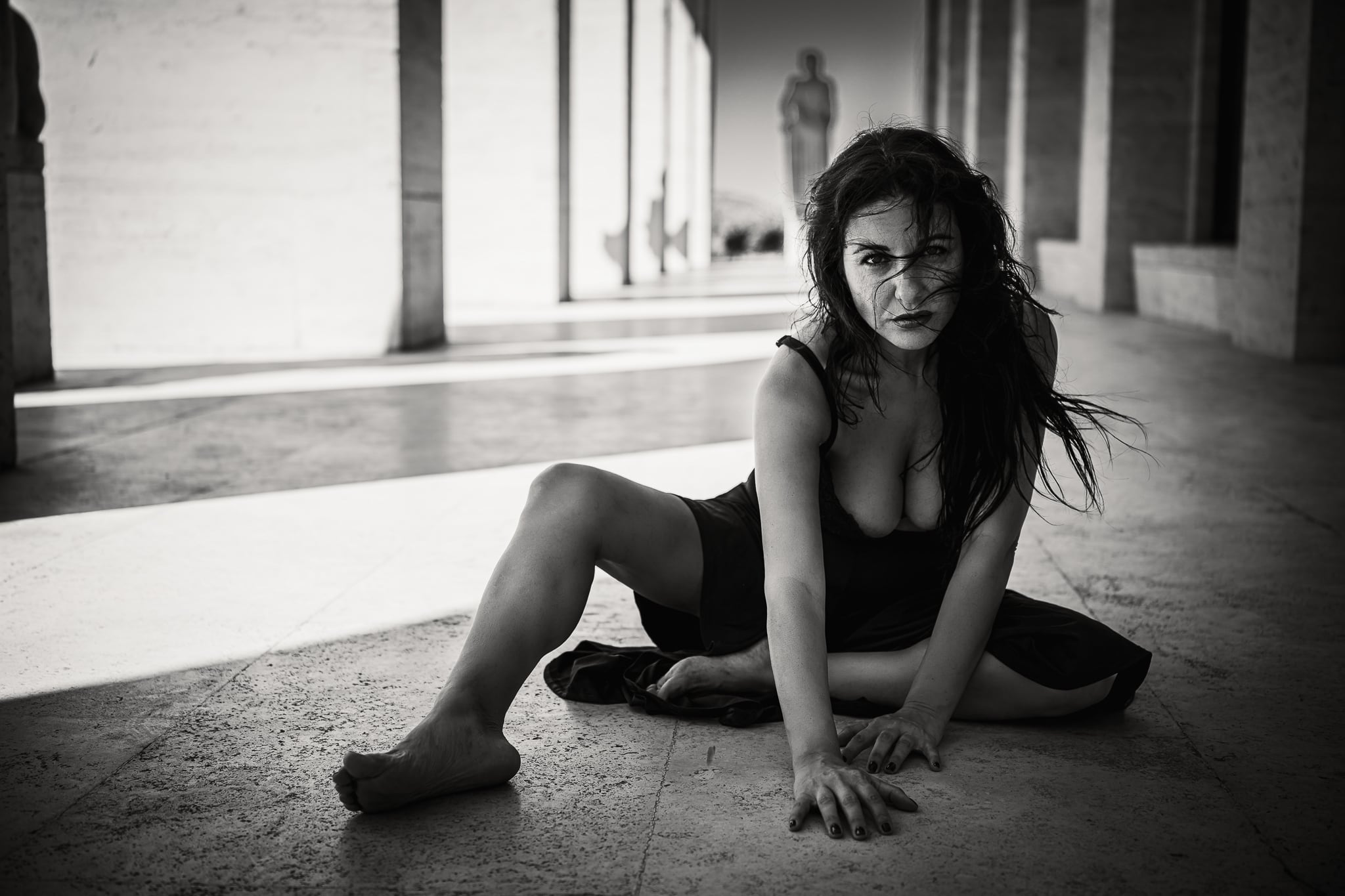
Irving Penn and the dignity of the human figure
Irving Penn approached the human figure with extraordinary formal discipline, but his work was never only about fashion.
The Met describes his long career as a sustained study of face, figure, attitude, demeanor, adornment and artifact, with a particularly precise attention to composition and detail. That is another influence I carry into my own photography.
A body is not simply a shape to be corrected, it is part of the language of a person.
- The position of a shoulder.
- The tension of a hand.
- The way someone sits.
- The way someone looks away.
- The way a dress falls around the body.
All of these things communicate. This is why I don’t want to photograph only faces: I want to photograph presence through the body.
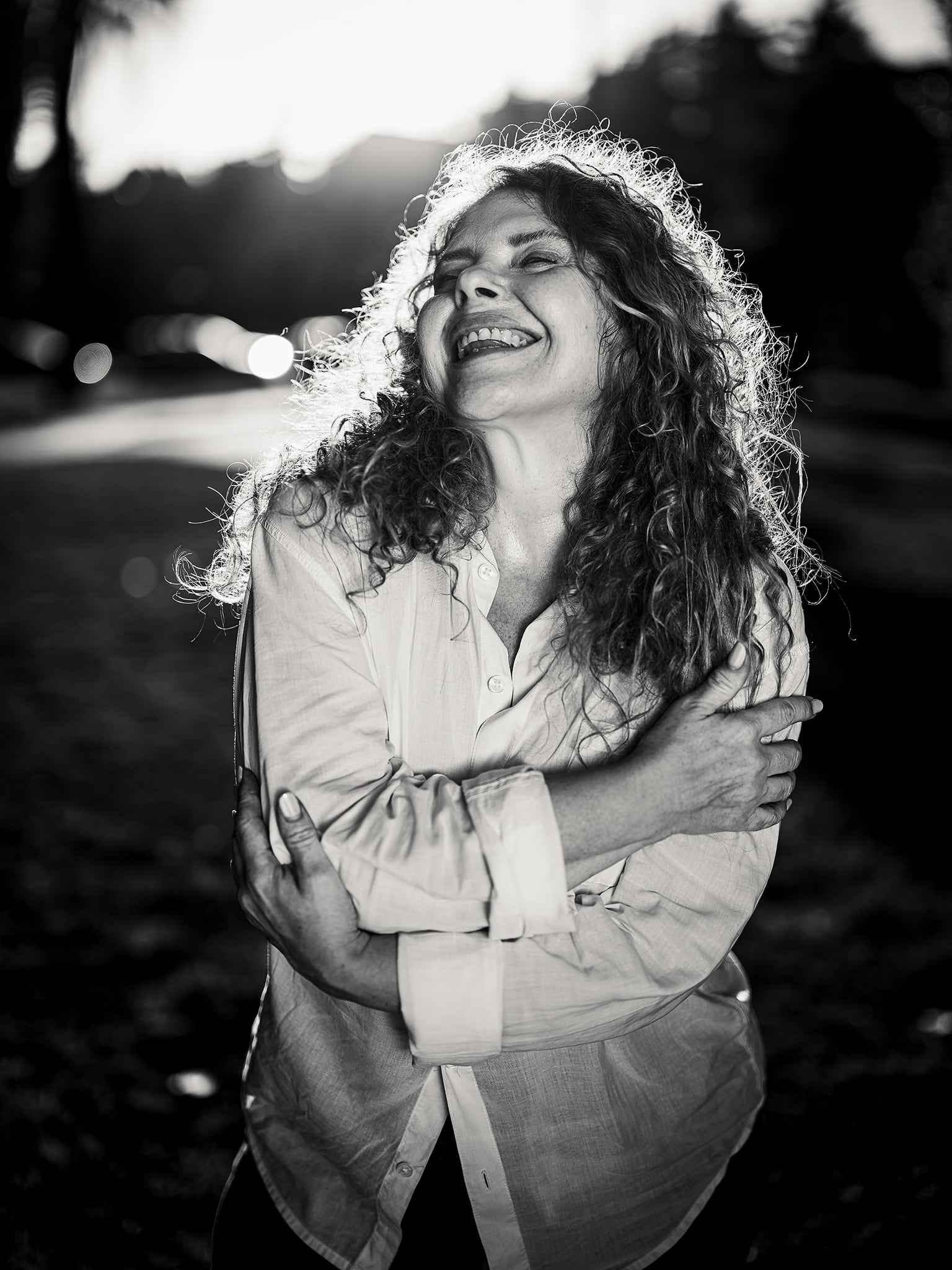
Helmut Newton: the body as power
Helmut Newton brings a completely different energy.
His photography explored fashion, sexuality, the female body, confidence and power with a visual language that was often provocative and confrontational. His work remains an important reference point in the history of fashion photography, and his foundation continues to preserve and exhibit that legacy.
I don’t want to reproduce Newton’s photography. What I take from him is something more fundamental: the refusal to treat the female body as passive decoration.
- A woman can occupy space.
- She can be sensual without being reduced to sexuality.
- She can be vulnerable without being weak.
- She can be powerful without having to perform power.
- And she can age without apologizing for it.
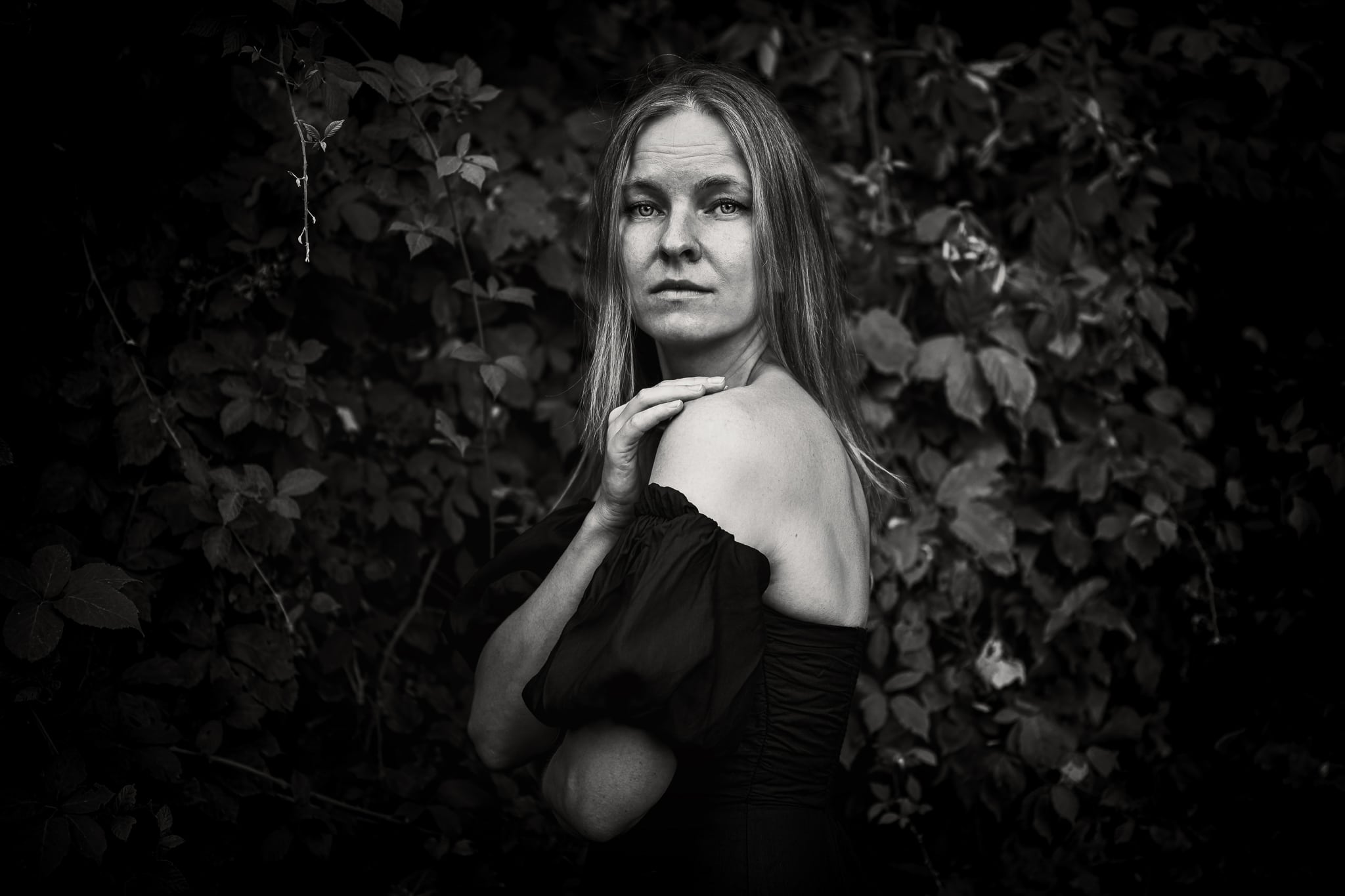
The problem with aesthetic perfection
The photographic industry has developed extraordinary technical abilities.
We can change skin texture, reshape bodies, remove wrinkles, alter proportions, modify colour, change expressions and construct an image that may have very little relationship with the person who stood in front of the camera.
Technology itself is not the problem; the question is why we use it. Retouching can be useful when it serves the photograph, it becomes problematic when it serves our fear of reality and there is a difference between refining an image and erasing a person.
I am interested in the first. I reject the necessity of the second because when every sign of life is removed from a face, something else disappears with it: identity.
What I want women to feel when they see their portraits
I don’t want a woman to look at one of my photographs and think: “I look younger.”
I want her to think: “I recognize myself.”
That is a very different kind of satisfaction. Perhaps the eyes look tired. Perhaps the skin shows time. Perhaps the body does not correspond to an artificial ideal. Perhaps there are asymmetries, scars, lines, softness or strength that a commercial image would normally try to hide.
None of this makes the portrait less valuable: sometimes it makes the portrait more honest, and honesty has its own beauty.
Beauty is not the absence of age
I don’t believe that women should have to fight aging, they should not have to become younger through photography, they should be allowed to become more themselves.
There is a particular tragedy in a culture that teaches women to fear the visible evidence of having lived: every year changes the face, every experience changes the body, every relationship, loss, joy, disappointment and triumph leaves something behind. Why should a portrait erase that? I would rather photograph a woman who carries her history than create an immaculate image of someone she has never been.
A portrait as an act of recognition
This is ultimately what portrait photography means to me:
- Recognition.
- Not perfection.
- Not correction.
- Not transformation for its own sake.
- To stand in front of the camera and be seen without having to satisfy an external definition of beauty.
- To allow a gesture to remain imperfect.
- To allow silence to exist.
- To allow age to exist.
- To allow the body to speak.
That is why the photographs I am trying to make are not only photographs of women, they are photographs about identity, time, vulnerability, strength and presence. And perhaps this is the most important thing I can offer as a portrait photographer: not a younger version of you, not a more perfect version of you, but a photograph in which you can still find yourself.
My photographic dictum
Free women from the fear of aging.
Free them from the tyranny of aesthetic perfection.
Let the portrait become a place where identity is not corrected, but seen.
FAQ: Authentic Female Portrait Photography
What is authentic female portrait photography?
Authentic female portrait photography focuses on personality, presence, emotion and individuality rather than relying exclusively on conventional beauty standards. The goal is not to create a generic idealized image, but a portrait that feels connected to the woman being photographed.
Should women’s portraits be retouched?
Retouching is a creative decision, not a moral issue. In my approach, post-production should enhance the photograph without systematically erasing identity, age or natural characteristics.
Can a portrait celebrate aging?
Absolutely. Age can become part of the visual language of a portrait. Lines, changes in skin and posture can communicate experience, character and individuality.
What makes a powerful female portrait?
A powerful portrait is not necessarily defined by a strong pose or dramatic expression. It can emerge from a quiet gaze, a gesture, a particular posture or a sense of emotional presence.
Where do you photograph women?
I work as a portrait photographer in Rome and throughout Italy, creating individual portraits, editorial portraits and personal projects in studio and on location.
Credits
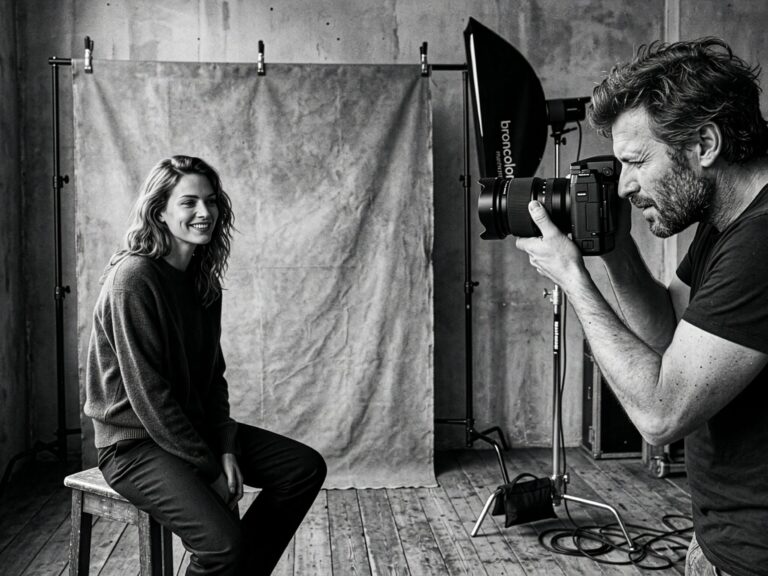
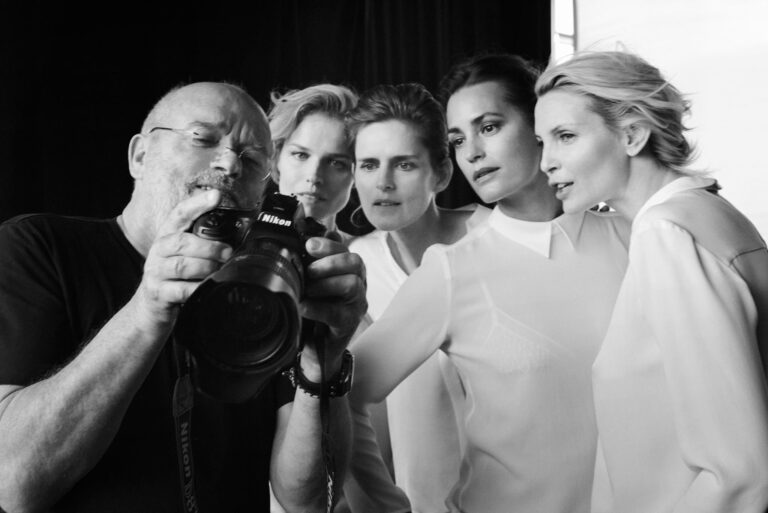
First pictures and cover image: Mascia Carfagna, Olga Petina, Laura Fontana
Second image: Francesca Alei
Third image: Valentina Pieri
Fourth image: Mascia Carfagna
Fifth image: Anna Alferova