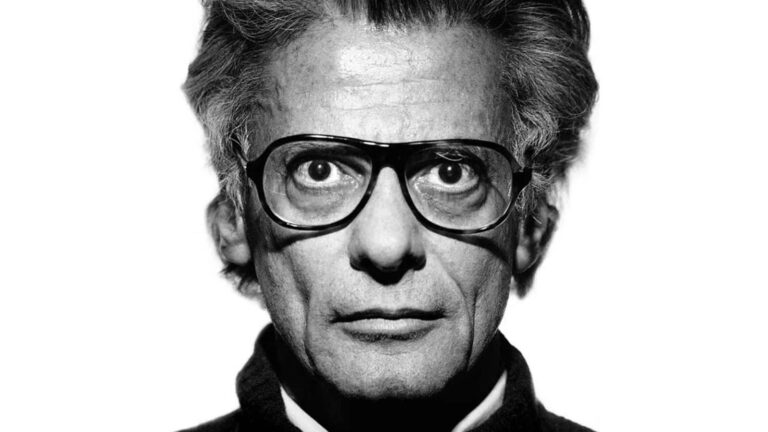
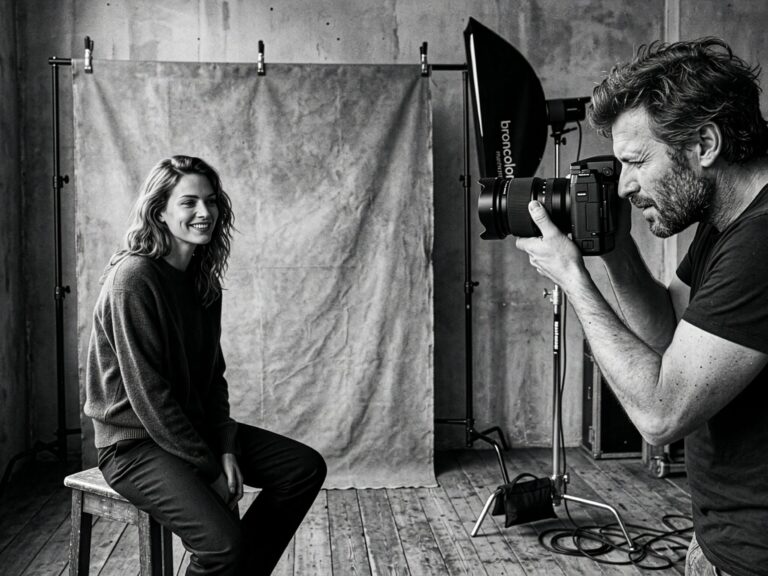
The Geometry of Truth: Deconstructing Peter Lindbergh’s Philosophy of Light and Honesty
In an era saturated with digital perfection, excessive retouching, and hyper-engineered studio environments, Peter Lindbergh’s body of work remains a monumental anchor for visual storytellers. He didn’t just take photographs of fashion icons and actors; he stripped away the armor of styling to reveal the human being underneath.
For those of us working between conceptual portraiture and documentary reportage, Lindbergh’s approach offers a masterclass in how restraint can carry more emotional weight than technical complexity. His refusal to compromise on authenticity continues to inspire a new generation of creators.
1. Visual Honesty: The Revolt Against Artifice
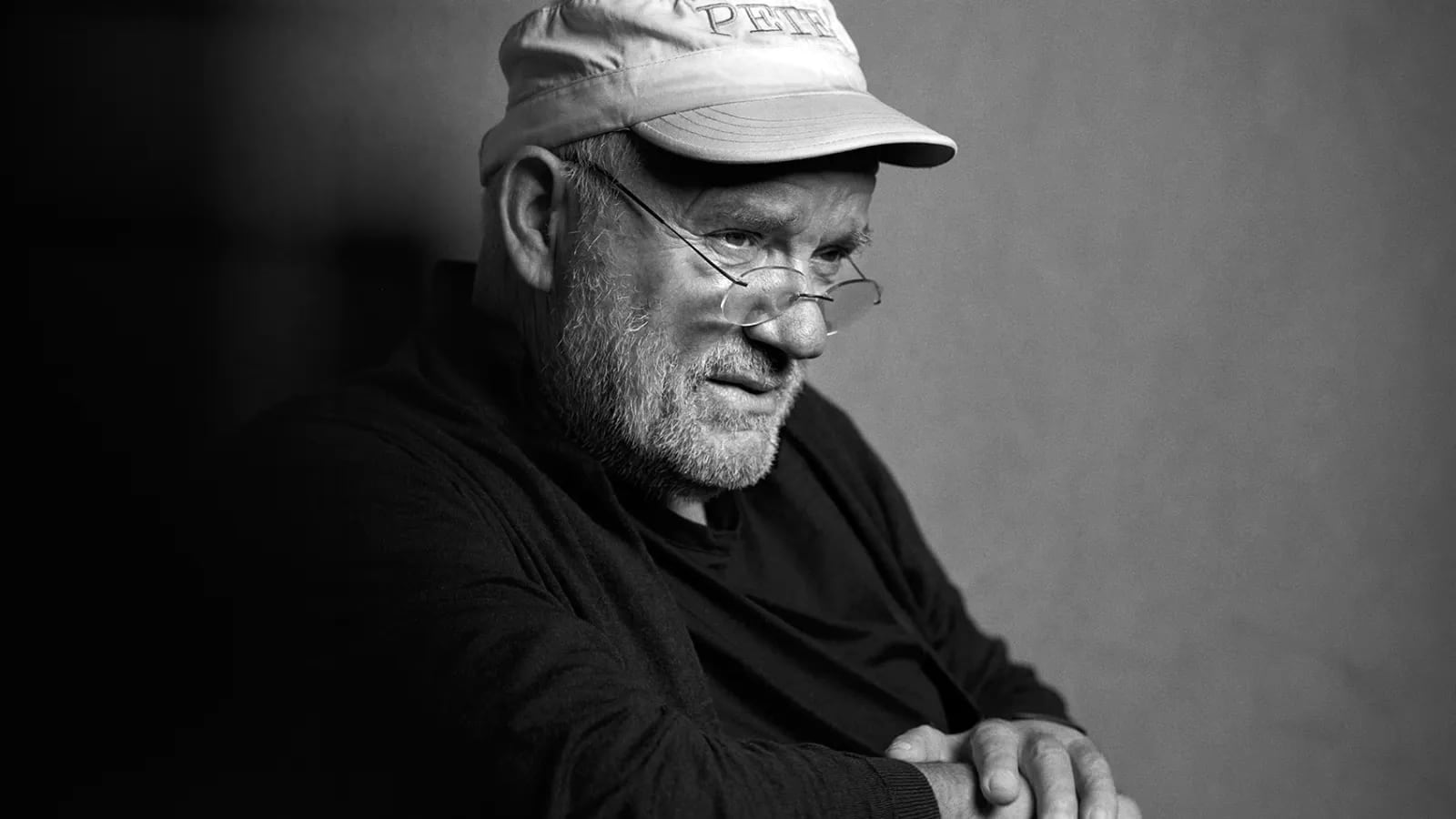
Lindbergh famously revolutionized 1990s fashion photography by rejecting the glossy, immaculate, and often cold perfection that dominated the industry. For him, true beauty emerged precisely where perfection ended.
- Embracing Vulnerability: Lines, freckles, tired eyes, and unposed body language were never flaws to be corrected; they were narrative elements.
- The Anti-Glamour Glamour: By encouraging his subjects to laugh, look away, or drop their guard, he shifted the paradigm from how a woman should look to who she actually is.
In visual storytelling, honesty creates an immediate contract of trust between the subject, the frame, and the viewer.
2. Natural Light and Outdoor Setups
While classical painters like Caravaggio and Rembrandt taught us how deep chiaroscuro and directional studio shadows can sculpt drama, Lindbergh mastered the unpredictable theater of natural outdoor light.
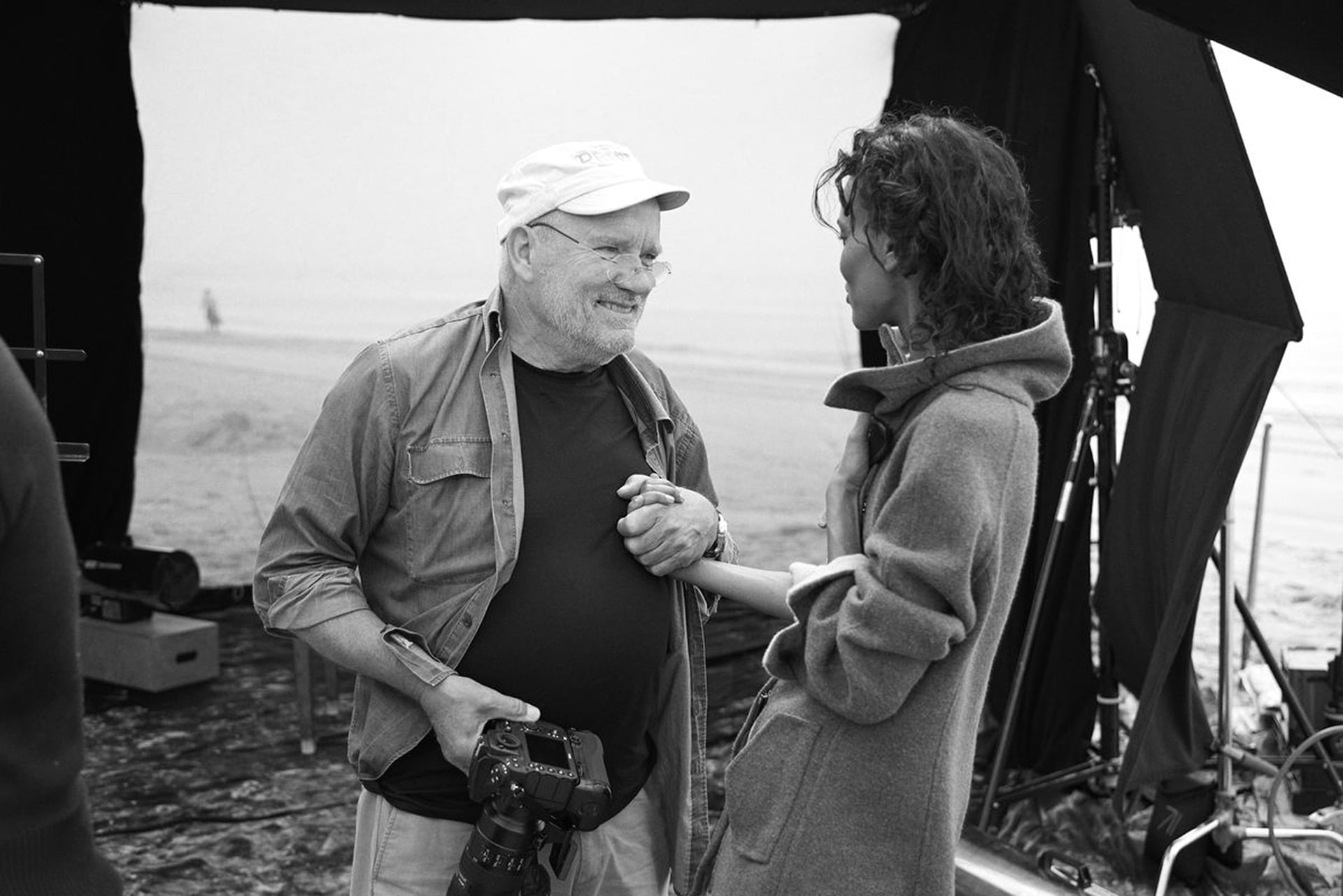
Translating to the Field: Shooting outdoors with minimal gear (much like working light and fast with a compact camera or a single prime lens) forces you to react to the environment rather than forcing the environment to bend to a rigid light diagram.
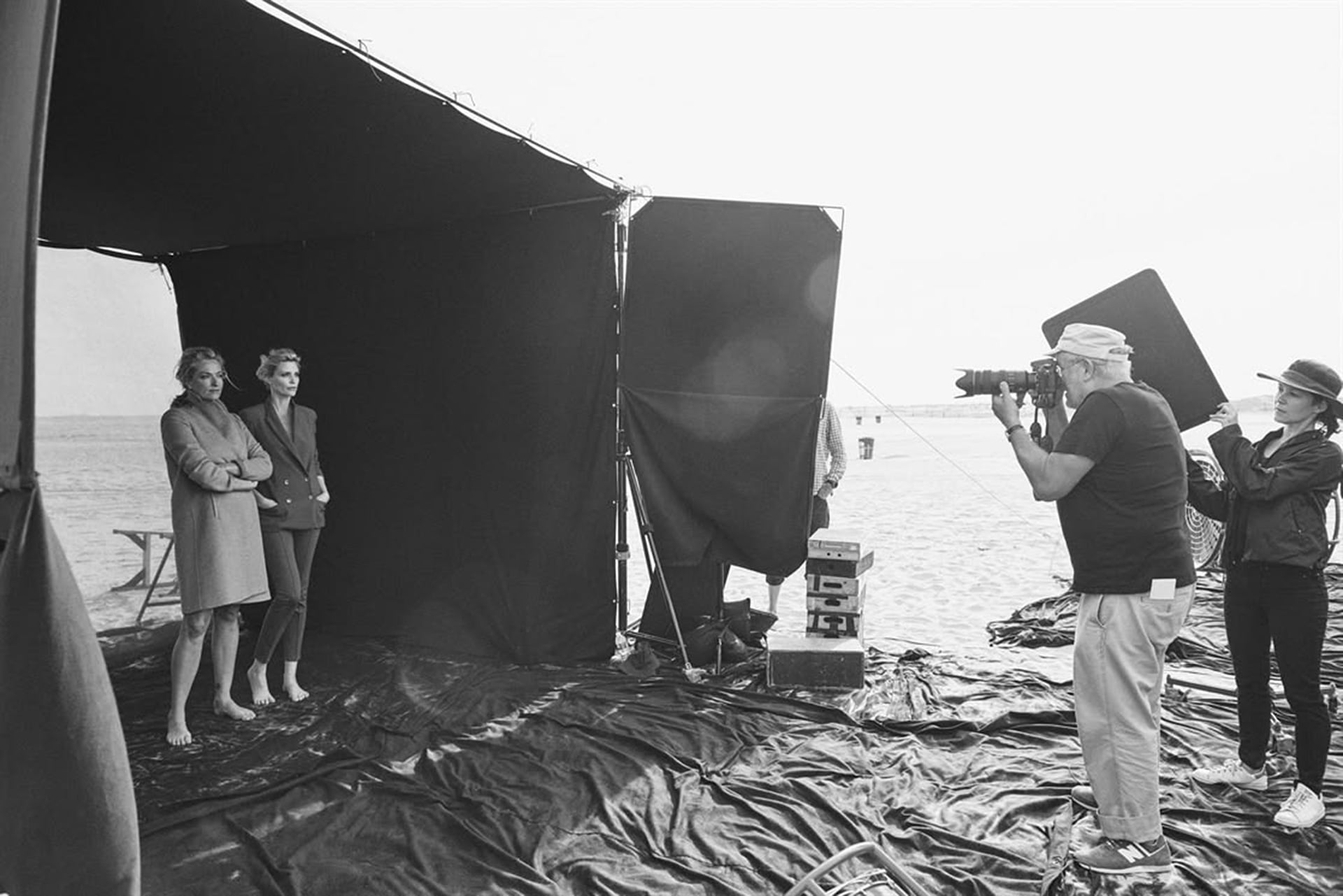
The Power of Overcast Skies: Lindbergh rarely relied on harsh midday sun or overly complicated multi-strobes outdoors. Overcast skies act as the ultimate giant softbox, wrapping the subject in soft, multidirectional diffusion that renders skin tones with exquisite fidelity.
Open Shade and Reflectors: When shooting on location—whether on industrial docks or windy beaches—he utilized open shade to maintain a low-contrast, atmospheric baseline, occasionally bouncing subtle fill light only to catch a vital glint in the eye.
3. Makeup and Hair: The “Undone” Aesthetic
Under Lindbergh’s direction, the hair and makeup trailer operated under a philosophy of subtraction rather than addition.
- Bare Skin: Heavy foundations and mask-like contours were replaced with translucent bases that allowed natural skin texture and pores to show through.
- Wind-Blown Hair: Hair was rarely shellacked into geometric submission. Instead, strands caught by the wind or casually tousled added a sense of motion, time passing, and raw vitality.
This minimalist approach ensures that the styling never overpowers the psychological core of the portrait.
4. Post-Production: Respecting the Negative
Lindbergh’s signature high-contrast black-and-white aesthetic is legendary, but its power lies in what was not done during the editing process.
- Grain and Tone: Rather than digitally smoothing skin or using frequency separation to eliminate human history, his post-production focused on rich mid-tones, deep blacks, and organic film grain.
- Integrity of the Capture: The digital darkroom should be used to amplify the mood and emotional resonance of a moment, not to sanitize it into a plastic illusion.
Final Thoughts
Studying Peter Lindbergh reminds us that photography is fundamentally an act of listening. By prioritizing natural diffusion, unforced styling, and uncompromising visual honesty, we create images that do not just capture a moment in time, but echo long after the shutter has closed.