The Anatomy of a Frame: Whispers of Memory and Chiaroscuro
Welcome back to this ongoing exploration of the photographic frame. In this installment, we break down an editorial portrait designed to evoke a profound sense of cinematic nostalgia and psychological intimacy. This piece dissects how an initial conceptual vision translates into a tangible, print-ready image through deliberate casting and precise light modification.
The Conceptual Spark and Intended Communication
The core ambition behind this image was to capture a moment of transition: a quiet, internal state suspended against an external force. Visually inspired by mid-century European cinema and classical painting, the photograph seeks to communicate a sense of enduring elegance mixed with a raw, introspective melancholy.
The narrative relies heavily on contrast: the absolute stillness of the subject’s contemplative posture versus the kinetic, unpredictable movement of her hair catching the wind. By enveloping the lower half of the frame in deep shadow and allowing a warm, textured backdrop to softly frame the profile, the image speaks to the themes of memory, identity, and the quiet resilience of the human spirit.
The Muse: Why Francesca Was Chosen
Bringing a narrative of this emotional weight to fruition requires a subject who can command the frame without relying on overt theatricality. Francesca was chosen precisely for her innate cinematic gravity and classical features, which perfectly anchor a vintage-inspired aesthetic.
Her gaze possesses an arresting, quiet intensity that immediately draws the viewer into her internal world. Francesca has a profound understanding of how to interact with the camera and the light; her subtle gesture, the hand gently supporting the chin, adds a layer of sophisticated vulnerability to the composition. Her strong profile and expressive eyes allowed the soft movement of the hair across her face to feel like a deliberate, poetic veil rather than an accident, making her the perfect collaborator for this timeless study.

Technical Execution and the Architecture of Light
Translating this mood into a high-end visual asset required a rigorous, subtractive approach to studio lighting, ensuring the shadows remained rich and meaningful while the textures maintained their tactile identity.
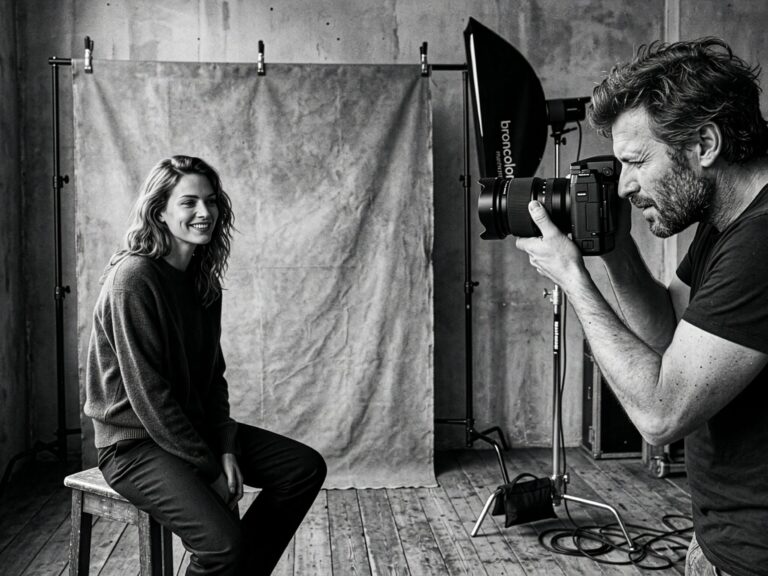
The setup was engineered around a single main light source to mimic the directional, dramatic quality of natural light filtering through a high window. A key light modifier, fitted with a thick diffusion layer and a directional grid, was positioned on camera left, elevated at a 45-degree angle and tilted downward toward the subject. The grid was absolutely essential to restrict the beam, allowing the soft light to sculpt Francesca’s face, hand, and the subtle details of her collar, while preventing any unwanted spill from flattening the deep shadows on her dark clothing.
The background, a textured canvas in warm, earthy tones, was placed several feet behind the subject. It caught only the natural, gradual falloff of the key light, creating a painterly halo effect that elegantly separates her dark beret and coat from the environment. Finally, a controlled, low-velocity air source was introduced from the side, gently lifting the hair across her face to introduce the crucial element of movement into an otherwise perfectly still, chiaroscuro composition.

The Team
Photographer: Michele Belloni (@_michelebelloni)
Model: Francesca Alei (@francyukiyo)
HMUA: Martina Manca (@smarty_mua)