Peter Lindbergh: The Poet of Truth and the Father of Modern Editorial Photography
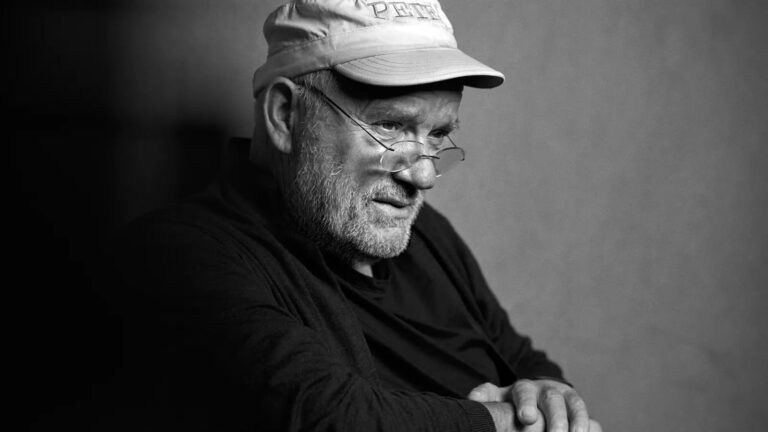
In the landscape of fashion and portrait photography, few figures have redefined not just an aesthetic, but an entire cultural perception. Peter Lindbergh (born Peter Brodbeck) was not merely an internationally acclaimed photographer: he was the pioneer of a humanist revolution that stripped fashion of artificiality, restoring the pure, raw, and authentic soul of portraiture.
Famous for shooting the historic January 1990 cover of British Vogue, widely considered the official birth certificate of the Supermodels, and for his unyielding battle against digital retouching, Lindbergh turned the camera into an instrument of liberation, redefining beauty through strength, vulnerability, and truth.
1. Origins and Early Life: Between Industrial Landscapes and Van Gogh’s Shadow
Peter Brodbeck was born on November 23, 1944, in Leszno, Poland (then under German occupation). Just two months after his birth, fleeing the advance of Soviet troops, his family relocated west, settling in Duisburg, an industrial city in the heart of Germany’s Ruhr Valley.
Growing up in Duisburg left an indelible mark on Peter’s visual imagination:
- The Industrial Aesthetic: Smokestacks, steel structures, railyards, and red bricks formed his everyday backdrop. This raw, unpolished texture became a permanent signature in his photographic work.
- Seaside Landscapes: Summer holidays spent in Noordwijk, along the vast, windswept beaches of the Netherlands, fostered a lifelong love for open horizons, overcast skies, and dramatic natural light.
Leaving school at age 14, he worked as a window dresser for local department stores Karstadt and Horten. At 18, to avoid military service, he moved to Lucerne and later to Berlin, enrolling in evening classes at the Academy of Fine Arts. However, Lindbergh’s restless spirit resisted traditional academic constraints; after a heated argument with an instructor who insisted on classical, nature-bound drawing, he decided to walk away.
Inspired by Vincent van Gogh, he embarked on an extended hitchhiking pilgrimage to Arles, France. For nearly two years, he lived a nomadic life across Provence, Italy, and North Africa, working on farms and selling his paintings at local markets. This period on the road forged his deep empathy for human nature and shaped his artistic vision.
Upon returning to Germany, he studied conceptual art at the Kunsthochschule in Krefeld and exhibited at the avant-garde Galerie Denise René in 1969. Yet, his decisive turn toward photography was still to come.
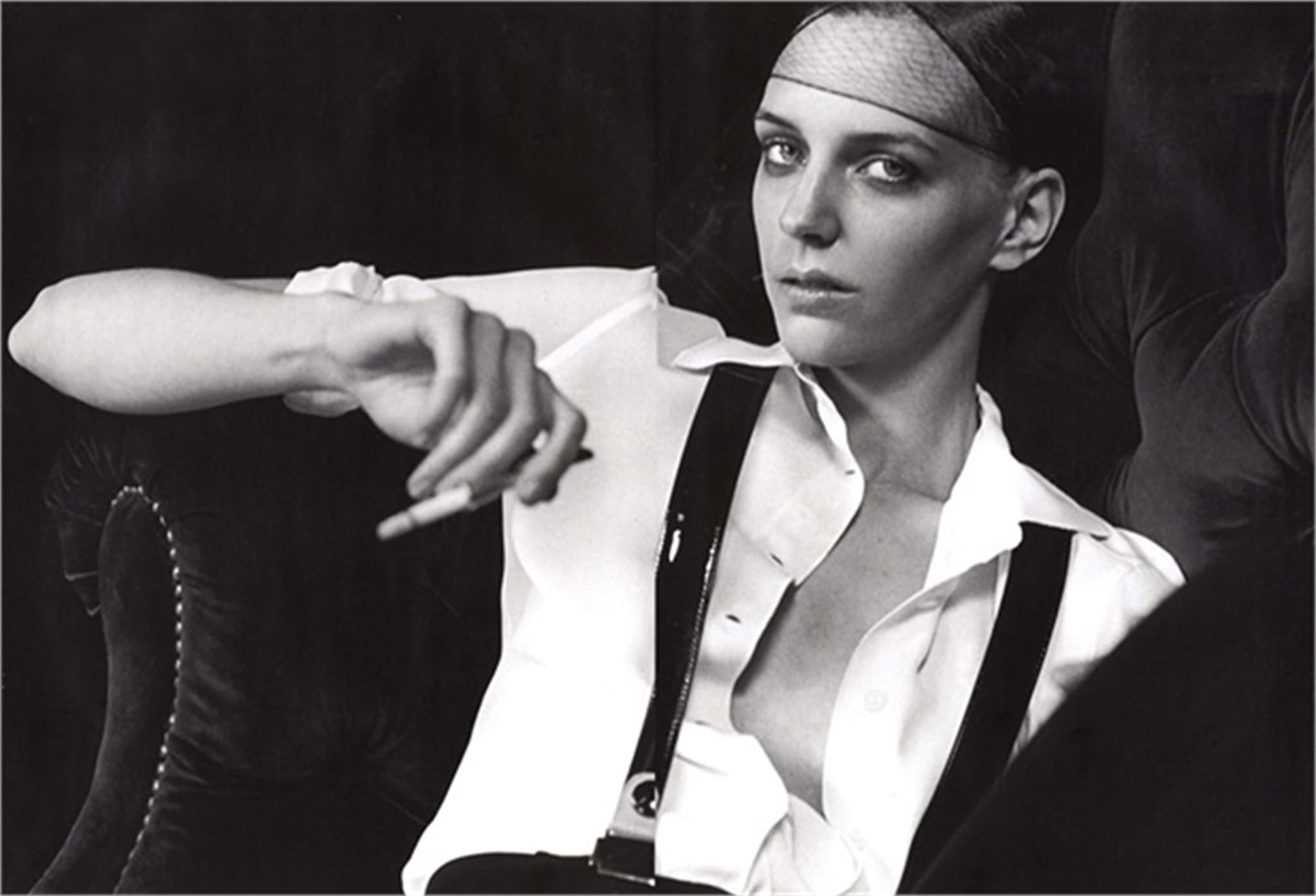
2. Discovering Photography and the Rise in Paris
In 1971, at age 25, Lindbergh bought his first camera (a compact Minolta) simply to take photos of his brother’s children. What began as a personal hobby quickly became a calling.
That same year, he landed a role as an assistant to commercial photographer Hans Lux in Düsseldorf. This 18-month apprenticeship laid his technical foundation, teaching him studio lighting (particularly Balcar strobes) and set management without constraining his creative instincts.
“Working with Hans Lux was essential. He wasn’t a photographer with extreme artistic ambitions, but a great, human professional. He showed me everything without barriers or rigid dogma.”
— Peter Lindbergh
- 1973: He set up his own independent studio in Düsseldorf. Discovering another photographer named Peter Brodbeck listed in the local phone directory, he randomly chose the surname Lindbergh.
- The Reportage Approach: One of his early breakout commercial campaigns for Samson rolling tobacco stood out for its unscripted spontaneity: Lindbergh took to the streets of Amsterdam to capture real people rolling cigarettes on the spot, rejecting staged setups entirely.
- 1977–1978: Renowned art director Willy Fleckhaus commissioned him for a fashion story in Moda & Wohnen. The work caught the eye of Germany’s Stern magazine, leading to a major 14-page assignment covering Paris fashion.
- The Move to Paris: In 1978, after securing an ongoing editorial contract with Marie Claire, Lindbergh moved to Paris with his wife, Astrid. It marked the beginning of his international editorial career.
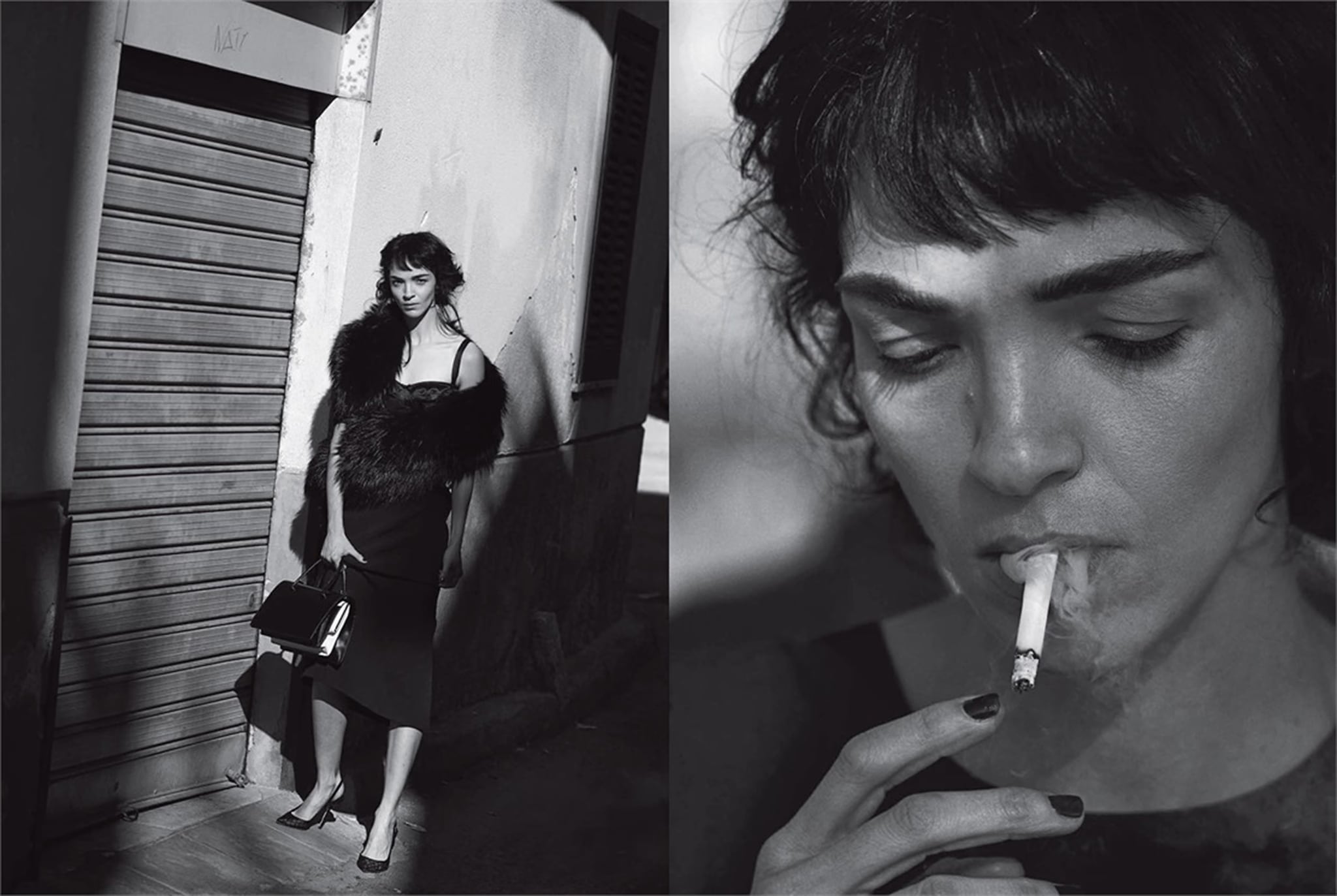
3. The Supermodel Revolution and Historic Covers
During the 1980s, fashion photography was dominated by a heavily polished aesthetic: dense makeup, lacquered hair, harsh studio strobes, and models presented as unattainable mannequins. Lindbergh revolted against this standard, championing strong, natural, vulnerable women with distinct personalities.
The “White Shirts” Shoot in Malibu (1988)
In 1988, for American Vogue, Lindbergh gathered a group of emerging models on the beach at Malibu: Estelle Lefébure, Karen Alexander, Rachel Williams, Linda Evangelista, Tatjana Patitz, and Christy Turlington. He photographed them wearing simple white cotton men’s shirts, with minimal makeup and windblown hair, laughing on the shoreline. Vogue’s editor-in-chief at the time, Grace Mirabella, rejected the images as unfit for the magazine’s glamorous standard and discarded them.
Anna Wintour and the Debut US Vogue Cover (November 1988)
When Anna Wintour took over American Vogue, she retrieved Lindbergh’s vision. For her debut November 1988 cover, she selected a Lindbergh photograph of 19-year-old Israeli model Michaela Bercu. Shot outdoors in natural sunlight, Bercu wore a Christian Lacroix Haute Couture jacket paired with $50 Guess jeans, squinting slightly in the sun with her jacket open: a groundbreaking blend of high fashion and street style that redefined fashion publishing.
“The Supermodel Birth Certificate” (British Vogue, January 1990)
In January 1990, Lindbergh created what remains the most famous cover in fashion history for British Vogue. Set in New York’s SoHo district, the shot brought together five iconic faces: Naomi Campbell, Cindy Crawford, Linda Evangelista, Tatjana Patitz, and Christy Turlington.
The impact was monumental:
- It officially launched the global Supermodel phenomenon.
- It established narrative, urban black-and-white photography as an industry standard.
- It directly inspired pop star George Michael to cast all five models in his iconic “Freedom! ’90” music video.
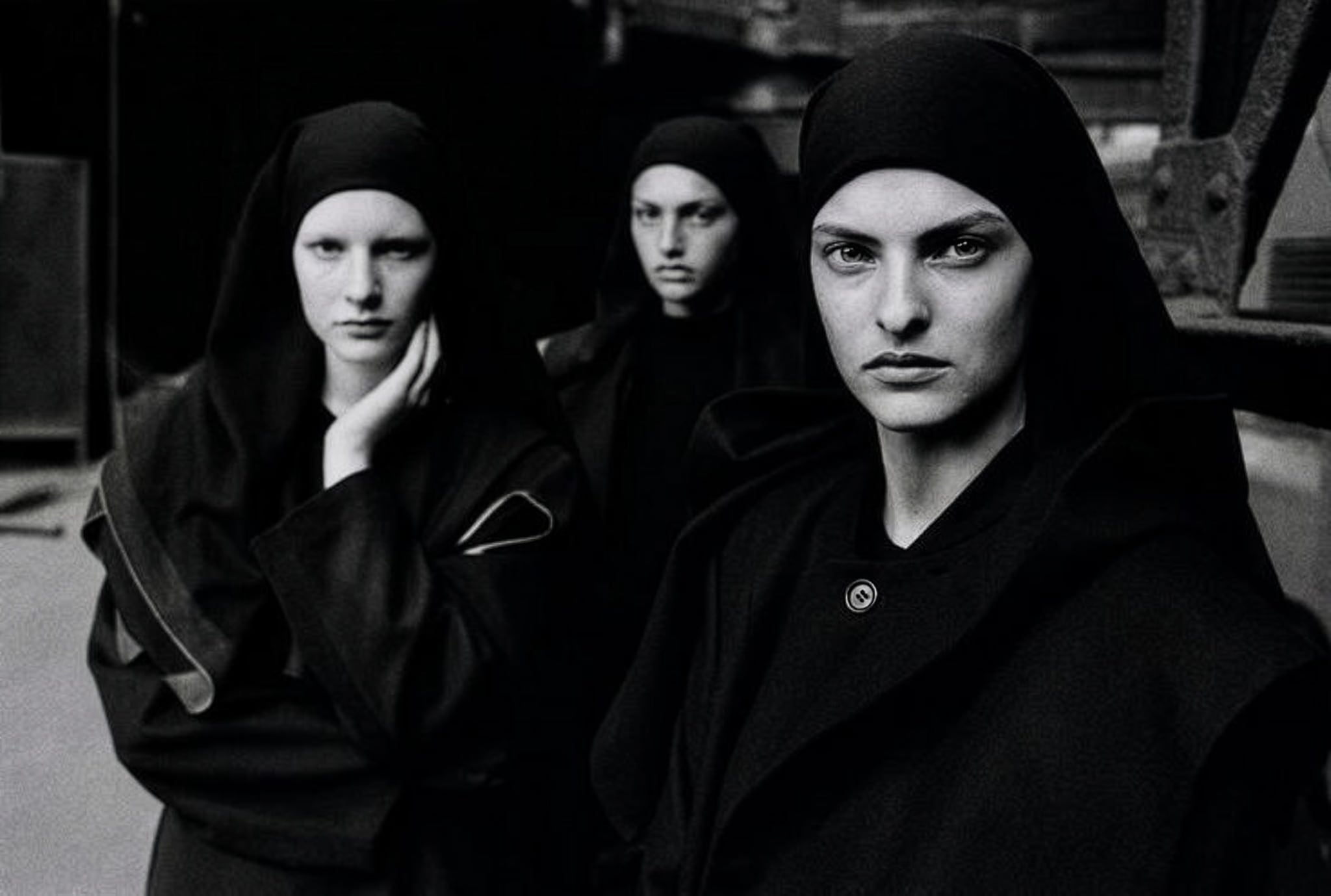
4. Visual Style and Photographic Philosophy
Black and White as a Dimension of Truth
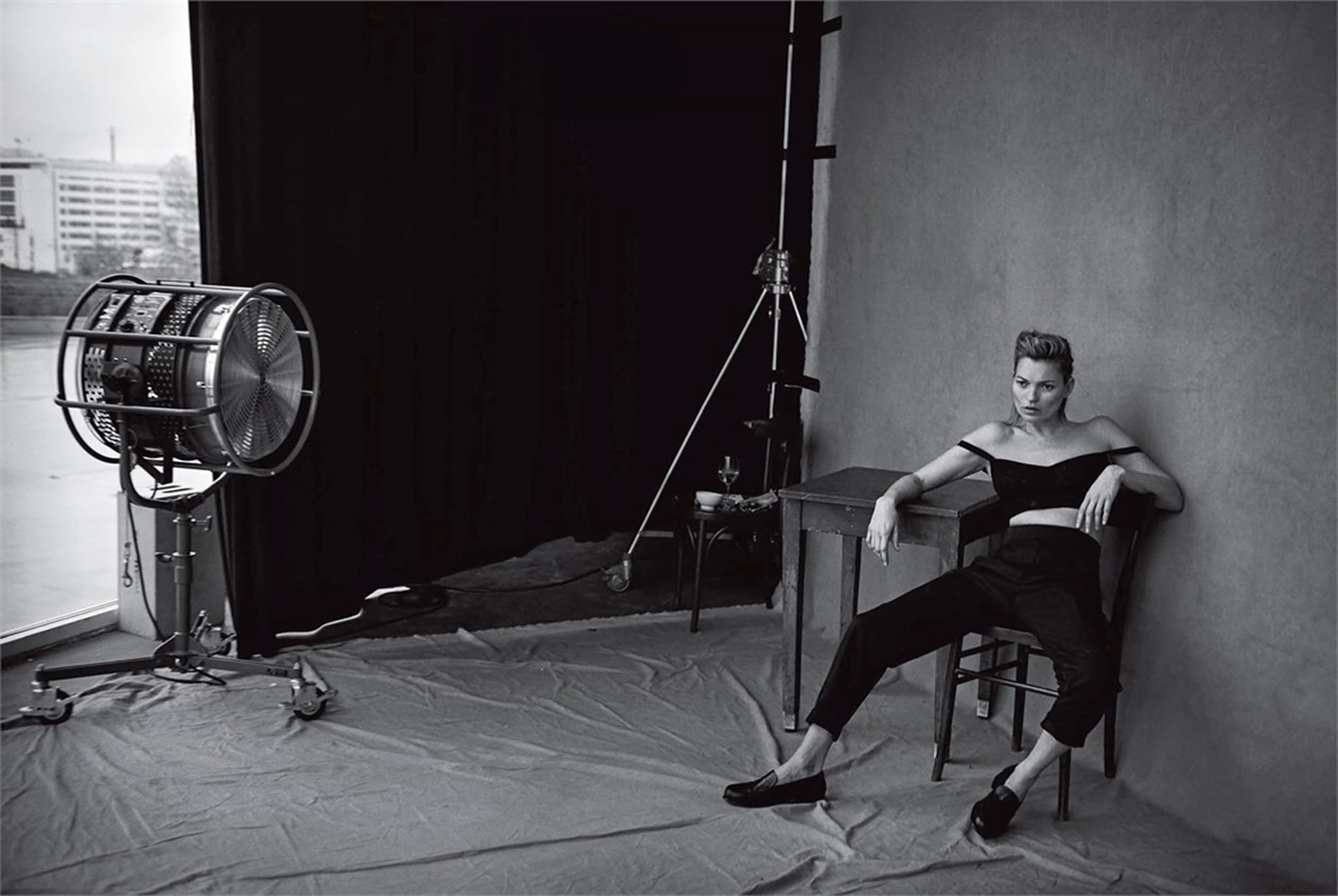
While he shot in color when specifically requested by publications, black and white was Lindbergh’s core medium. He believed color introduced commercial distraction, whereas black and white stripped away the superficial to create a timeless quality. His visual influences spanned German Expressionist cinema (such as Fritz Lang’s Metropolis) to 1930s American Farm Security Administration documentary photography (Walker Evans, Dorothea Lange).
The Stand Against Retouching
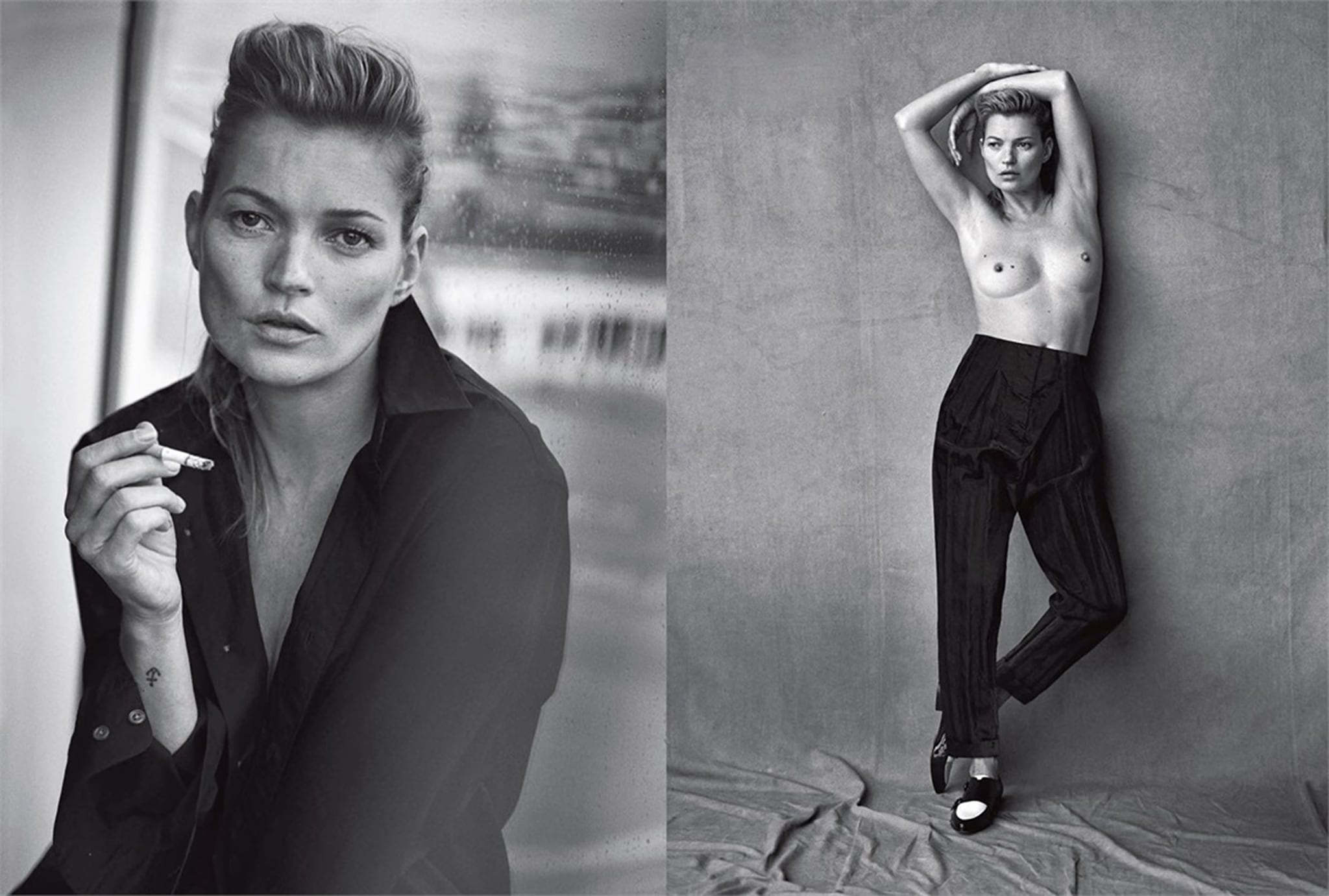
Lindbergh was one of the most vocal opponents of heavy digital post-processing in fashion media. He routinely inserted non-retouching clauses into his magazine contracts, forbidding editors from smoothing skin or altering facial features.
“This should be the responsibility of photographers today: to free women, and finally everyone, from the terror of youth and perfection. There is no beauty without truth.”
— Peter Lindbergh
Expression lines, freckles, fatigue, and real skin texture were, to Lindbergh, the essential elements of human character and soul.
Cinematic Storytelling
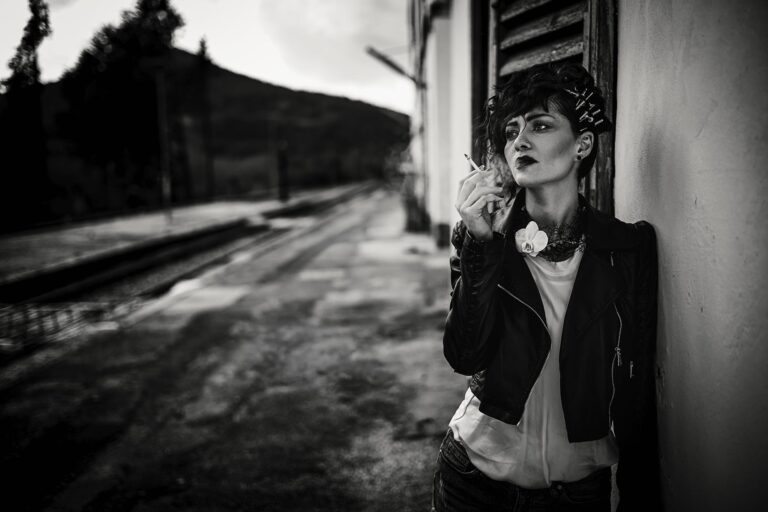
A single Lindbergh frame always suggests a larger narrative. His imagery often resembles stills from a French New Wave film or Neorealist cinema, setting subjects against industrial backdrops, deserted train stations, remote beaches, or quiet city streets.
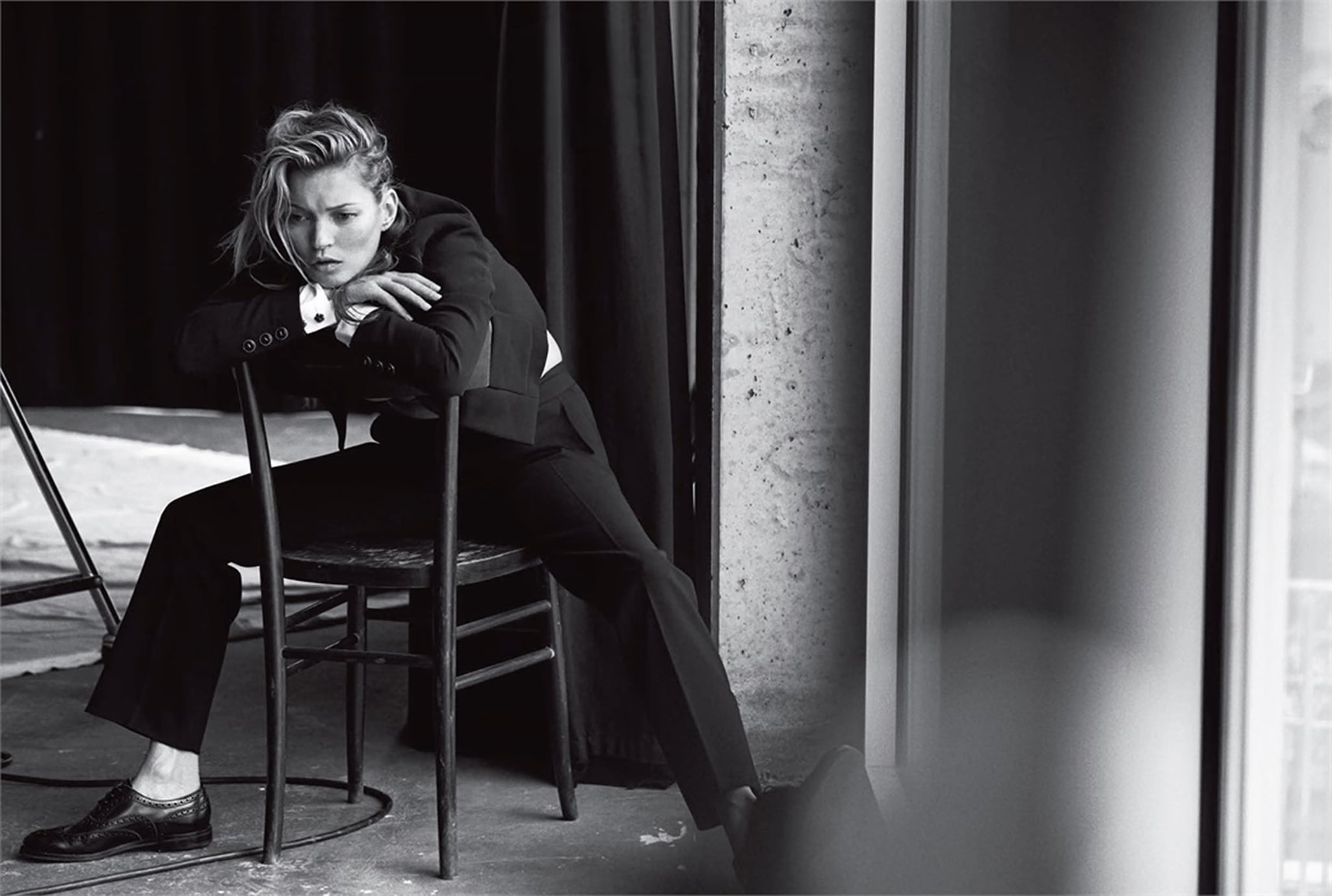
5. Technical Gear and Working Method
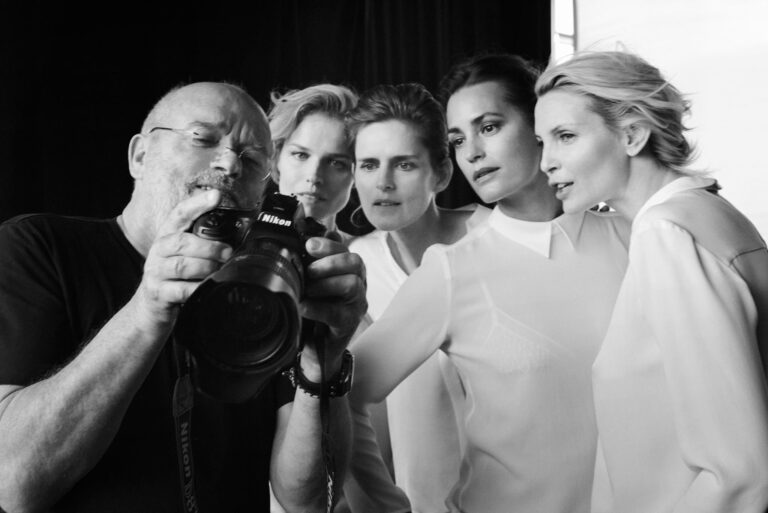
Lindbergh’s technical approach was grounded in simplicity, always prioritizing human connection over complex technical setups.
Camera Systems and Lenses
| Era | Key Camera Bodies | Preferred Lenses |
|---|---|---|
| Film Era | Pentax 67 (Medium Format) Nikon F3, F4, F5, FM2 (35mm) Konica Hexar / Leica M | 105mm f/2.4 (Pentax 67) 85mm f/1.4, 50mm f/1.4 |
| Digital Era | Nikon D810, Nikon D850 Panasonic Lumix GX/G series (Street/Reportage) | AF-S Nikkor 70-200mm f/2.8G/E ED VR 50mm f/1.4G, 85mm f/1.4G |
Shooting Style and Lighting
- Handheld Mobility: Lindbergh rarely used tripods. He preferred moving continuously around his subjects to maintain an energetic, fluid pace throughout the session.
- Lighting: He favored natural light, often diffused by overcast skies or large studio windows. When using artificial sources, he preferred continuous tungsten lights or soft, indirect flash through large diffusion scrims rather than harsh, direct strobes.
- Digital Workflow: Transitioning to digital, he set his camera displays to Monochrome mode to evaluate tonal balance in real time. In post-production, fine digital grain was applied to mirror the organic structure of Kodak Tri-X or T-Max films, with skin smoothing strictly prohibited.
6. The Pirelli Calendar: A Historic Legacy
Peter Lindbergh holds a unique record in the history of the Pirelli Calendar (The Cal): he is the only photographer ever invited to shoot three official editions (plus an anniversary special project):
- 1996 Pirelli Calendar (El Mirage, California): Shot in the dry lake bed of El Mirage, featuring models such as Kristen McMenamy, Eva Herzigová, and Carré Otis in a raw, desert environment.
- 2002 Pirelli Calendar (Paramount Studios, Los Angeles): Set on Hollywood soundstages, introducing a narrative, film-inspired aesthetic to the calendar.
- 2014 Pirelli Calendar (50th Anniversary): Co-created with Patrick Demarchelier, featuring icons like Alessandra Ambrosio, Helena Christensen, and Karolína Kurková.
- 2017 Pirelli Calendar (“Emotional”): A landmark edition focusing on unretouched portraits of celebrated actresses—including Nicole Kidman, Julianne Moore, Meryl Streep, Helen Mirren, Penelope Cruz, Robin Wright, and Uma Thurman—celebrating maturity, intelligence, and authentic grace over artificial youth.
7. Anecdotes, Curiosities, and Famous Monograph Works
- The Telephone Book Name Change: The name “Lindbergh” was selected entirely at random from a Düsseldorf phone directory in 1973 to distinguish himself from another local photographer named Peter Brodbeck.
- The 24-Hour Paris Decision: When considering a move to Paris in 1978, he asked his wife, Astrid, how she felt about it. Noticing her hesitation, he said, “How about Paris?” She nodded, and the moving truck was booked the next day.
- The Art Book Addiction: His Paris apartment and studio were famous for stacks of art and photography books that filled entire rooms. He often joked that he had to buy duplicate copies of books he already owned simply because he couldn’t locate them among the piles.
- Major Monographs: His work has been published in legendary volumes by Taschen, including Women by Peter Lindbergh (1993), A Different Vision on Fashion Photography (2016), and Untold Stories (2020), which he personally curated shortly before his passing.
An Immortal Legacy
Peter Lindbergh passed away in Paris on September 3, 2019, at the age of 74, leaving an irreplaceable void in the world of art and fashion.
His legacy transcends fashion photography. Lindbergh proved that editorial portraiture can reach the height of fine art when guided by empathy, honesty, and respect for human dignity. In an era increasingly dominated by synthetic perfection and digital filters, his work remains an enduring testament to the truth that real beauty lies in imperfection, character, and the unmasked human soul.