The Naked Truth Beyond the Medium
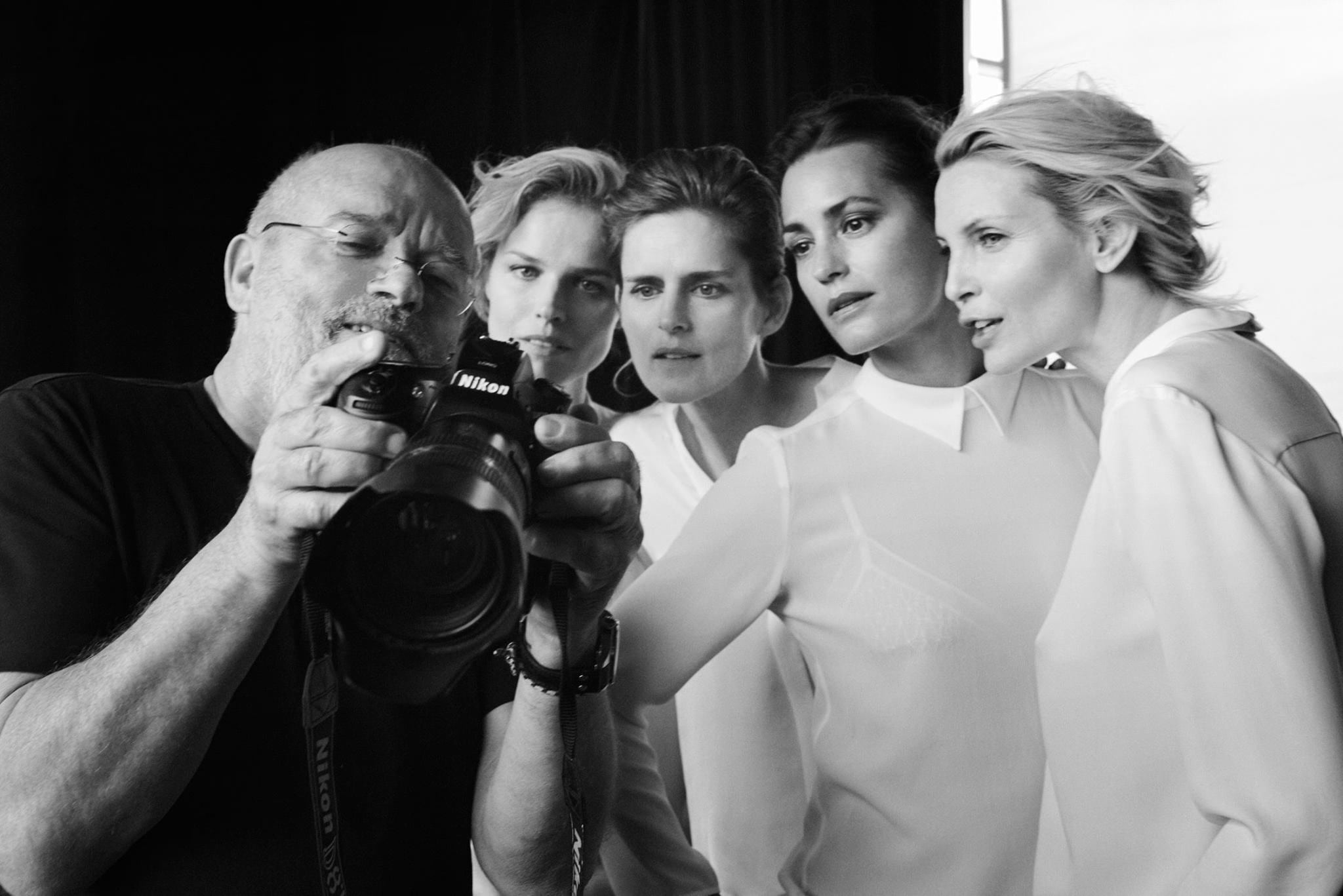
When observing a portrait by Peter Lindbergh, the mind does not immediately jump to megapixels or file sharpness. It goes to the naked truth. Yet, behind his relentless pursuit of authenticity, there was a constant and profound technical evolution that saw him move from the reflective slowness of medium format to the urgency of 35mm, always maintaining a visceral connection with the Nikon system. His trusted camera became an extension of his own eye, capturing moments stripped of artificial artifice: through every lens change and technological shift, his artistic vision remained purely focused on humanity.
The Urgency of 35mm and the Liberation of the Subject
In the 1980s and 1990s, while sculpting the era of supermodels on windswept beaches or industrial streets, Lindbergh often relied on the purely mechanical robustness of the Nikon FM2 (introduced in 1982) and, later, on the technological advancement of the Nikon F4 (1988) and F5 (1996). These cameras guaranteed him a dynamism and operational speed impossible for heavy medium-format systems, allowing him to capture the movement, the breath, the precise instant when the pose collapsed to make room for the person. As he loved to recall: “This should be the responsibility of photographers today: to free women, and finally everyone, from the terror of perfection and youth.”
The Digital Transition: The Density of Black and White
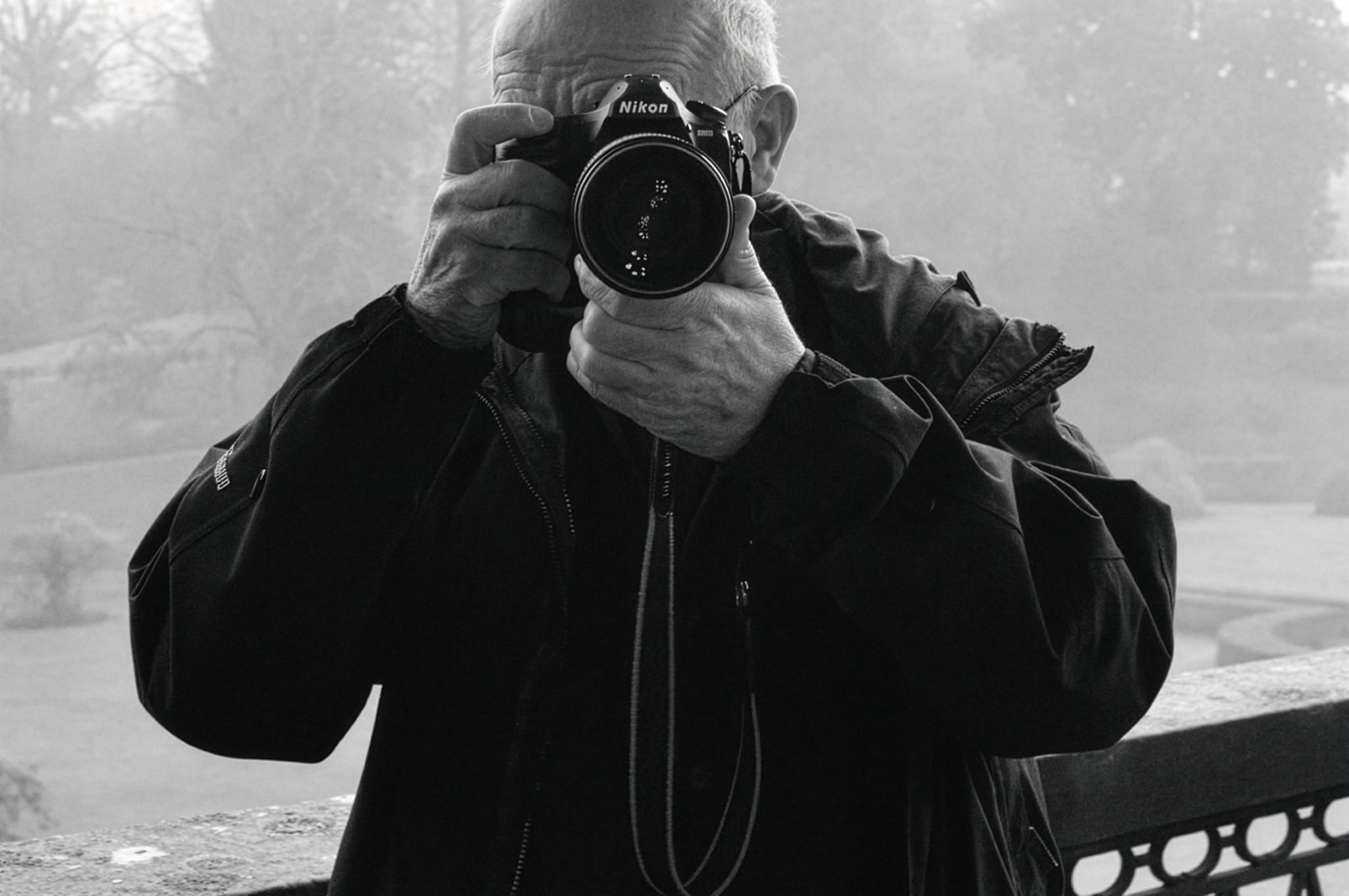
The transition to digital did not diminish this philosophy, but refined it. In the final years of his career, Lindbergh found the definitive tool to translate his vision in the Nikon D810 (2014). He was not looking for the sterility of high resolution, but the material density of the image. The D810, frequently paired with tireless workhorse lenses like the AF-S Nikkor 24-70mm f/2.8, AF-S 70-20mm f/2.8 or fast prime lenses, offered him an extraordinary dynamic range. This ability to read deeply into the shadows without blowing out the details is the secret of his transition: digital, in his hands, returned a dense, organic black and white, capable of keeping intact all the micro-contrast and cinematic soul of fashion reportage.
A Tactile Memory: The Personal Connection with the Nikon System
There is a tactile memory, an unmistakable sound of the shutter that anyone who has held a Nikon carries imprinted in their hands. Since 1999, when I began exploring light through the viewfinder of these cameras, I understood that it is not simply about ergonomics, but how the sensor interprets the highly delicate transition between light and dark. Today, in my workflow, the alternation between the rigorous geometry of medium format in the studio and the dynamism of the Nikon Z8 represents exactly the continuation of this search. It delivers remarkable color science and speed in every single frame; every assignment becomes a renewed conversation between tradition and modern technological evolution.
Sculpting Chiaroscuro: The Z8 and the Return to Pictorial Purity
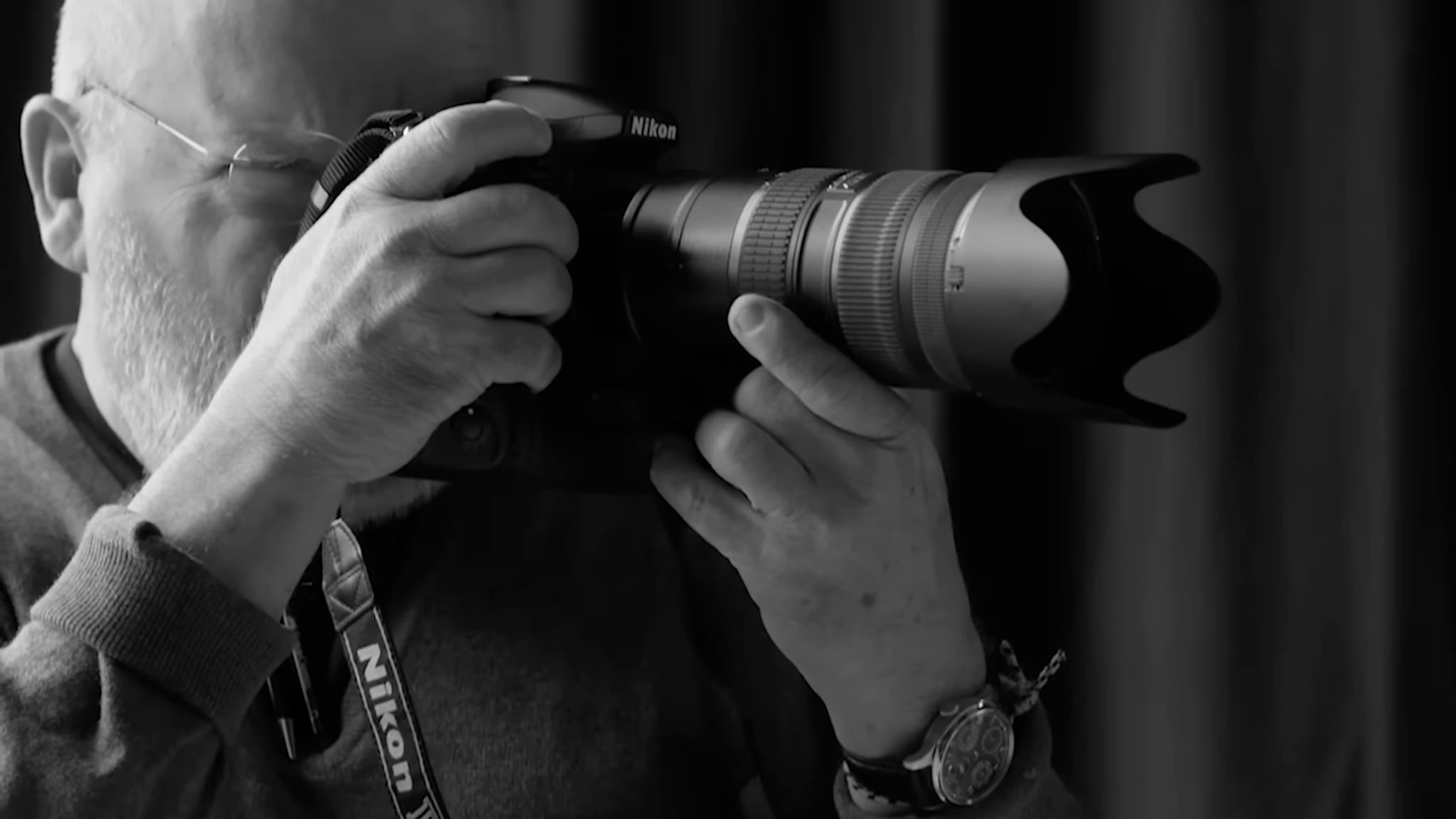
Approaching an editorial session pairing the Z8 with the Nikkor Z 24-70mm f/2.8 S II is a deliberate choice. Just like the D810 for Lindbergh, the current mirrorless flagship possesses an extraordinary ability to shape chiaroscuro. The blacks generated by this sensor are never empty, but dense and sculptural. The native monochrome rendering possesses a three-dimensionality that does not require excessive digital artifacts or alterations. It is a return to that pictorial purity, to that visual honesty where the equipment disappears, leaving on the file only the weight of silence and the essence of the person in front of us.